
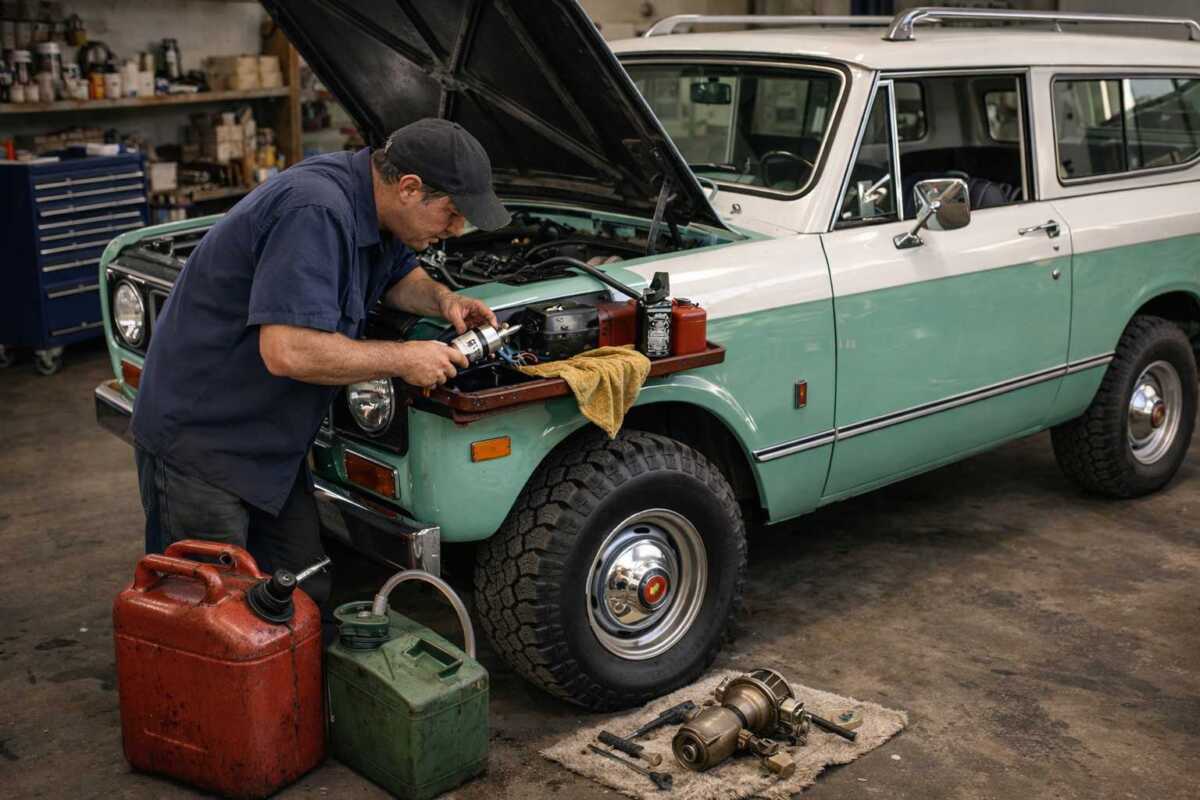
There’s a special kind of frustration reserved for a vehicle that runs perfectly… until it doesn’t. Min? A small block Chevy 350 running a Holley Sniper 2 EFI with a return-style fuel system. Strong. Reliable. Confident. Until about 5–15 minutes into runtime.
Then the gremlins arrive.
Here’s the step-by-step journey that led me to conclude the fuel pump is headed for retirement.
Step 1: Identify the Pattern (Heat Is a Clue)
Cold start? Excellent.
Idle? Smooth.
Initial drive? Strong.
But once the engine heat builds and everything is fully soaked, symptoms creep in:
- Hesitation
- Power loss
- Pressure instability
- Eventual stalling
Anything that fails only after heat builds deserves suspicion. Heat soak exposes weak electrical components and worn internal tolerances.
Fuel pumps don’t enjoy heat. A marginal pump really doesn’t.
Step 2: Rule Out the Usual Suspects
Before blaming the pump, we work through the basics:
- ✅ Proper wiring and solid grounds
- ✅ No pinched return lines
- ✅ Clean filters
- ✅ No vapor lock conditions
- ✅ Tank venting confirmed
When the plumbing checks out and the electrical supply is steady, the list narrows.
EFI systems are unforgiving. They demand stable pressure. Carburetors might limp along. EFI will not.
Step 3: Watch the Fuel Pressure (It Tells the Truth)
With Sniper EFI, fuel pressure is king. It should remain steady under load and at temperature.
What we observed:
- Strong pressure at startup
- Gradual pressure drop as temperature rises
- Inconsistent readings after 10–15 minutes
That is classic internal pump wear behavior.
A healthy pump doesn’t slowly fade. A dying one does.
Step 4: Understand How Pumps Fail
Electric fuel pumps rarely die instantly. Instead, they:
- Lose efficiency as internal clearances wear
- Struggle as fuel temperature rises
- Overheat under load
- Drop pressure first… then quit entirely
Heat increases resistance. Resistance increases current draw. Current draw increases heat.
It becomes a slow-motion spiral.
Step 5: Consider Age and Duty Cycle
If the pump has:
- Significant runtime – FYI mine was only about 3,000 miles.
- Been run low on fuel frequently – Mine had not.
- Been mounted in a heat-prone area – Mine had not.
- Or lived in a system that may have seen debris at some point – Nope
- Mounted low enough for gravity to feed the pump. – This is my issue!
It’s already living on borrowed time.
Fuel pumps are consumables. We just prefer when they consume themselves on someone else’s schedule.
Step 6: The Cost–Benefit Reality
At this stage, we ask:
Do we keep diagnosing a component that:
- Fails when hot
- Loses pressure under demand
- Has ruled out external causes
Or do we replace the most failure-prone component in the system?
A pump swap (no rewiring, no replumbing) is typically straightforward labor plus the cost of the pump itself. Compared to chasing intermittent EFI issues indefinitely, it’s cheap insurance.
The Verdict
When:
- Cold performance is strong
- Heat triggers pressure loss
- Plumbing and wiring check out
- EFI is sensitive to pressure drop
The conclusion becomes clear.
The pump isn’t dead or dying.
It’s fading.
And in the world of EFI, fading is as good as failing.
Replacement isn’t panic. It’s proactive maintenance before the next roadside sermon.
Next Move: Replace the pump, confirm stable hot pressure, and enjoy the sound of a small block running the way it was meant to—strong, steady, and without drama.
Did it, didn’t work. Ordered an in tank retrofit….